Destination
A day in the Eastern Townships
Three wineries, a lunch among the vines and a place to stay to discover the Eastern Townships without rushing.
The journal
The story.
It's easy enough to turn a day on the Wine Route into a race against the clock. You look at the map, see all those wineries a few kilometres apart, and start wondering how many you could fit between 10 a.m. and 5 p.m. Four? Five? Maybe six if you don't linger too long?
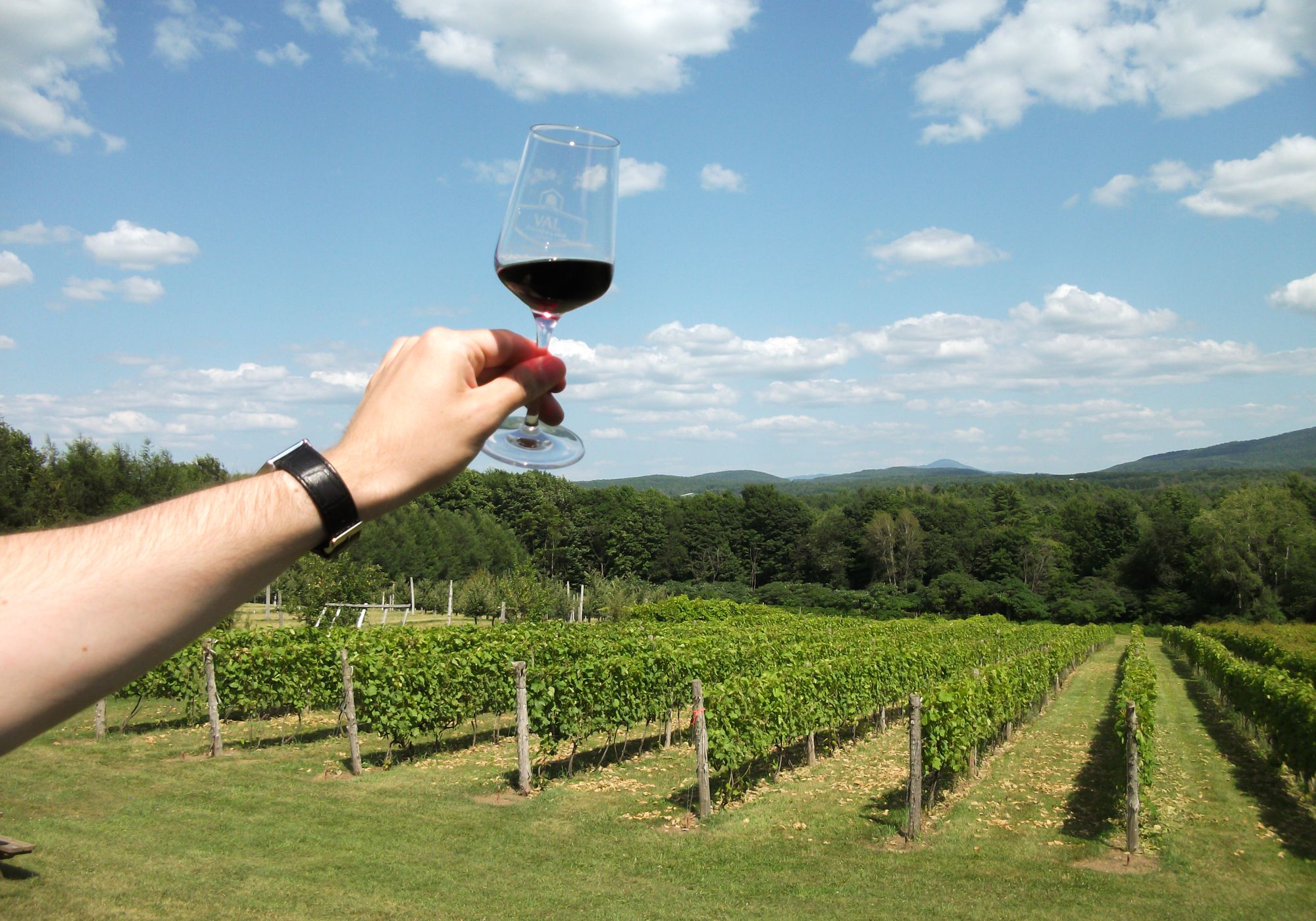
For this day in the Eastern Townships, we chose to do exactly the opposite. Three wineries are enough. The idea is to have time to taste, to walk a bit in the vines, to ask questions, to have a proper lunch and, above all, not spend the afternoon watching the clock. The route stays purposely around Dunham, at the heart of the Brome-Missisquoi Wine Route.
The three stops were also chosen so they don't tell the same story three times. The first takes us back to the beginnings of Quebec viticulture. The second helps understand how vines are grown here. The last shows how far Quebec producers have pushed experimentation with wine, cider and even vermouth. And since the day involves several tastings, we stay in the area overnight.
Winery no 1
Domaine des Côtes d’Ardoise
The first stop is at Domaine des Côtes d’Ardoise, in Dunham. There's a good reason to start here: it takes us almost back to the opening pages of modern Quebec wine history. The estate began in 1980 and is now presented as the oldest continuously operating winery in Quebec. Its first plantings included Gamay, Riesling, Maréchal Foch and Seyval blanc.
But the place's interest isn't only its age. The estate lets you walk among the vines and the sculptures of the outdoor exhibition Nature & Création. So you can take your time, do a first tasting and begin the day outside rather than immediately at a counter.
It's also a good way to put things in perspective. The Quebec viticulture we know today is still very young. Before talking about northern grape varieties, natural wines or new generations of winemakers, it's worth seeing where part of that story began.
Key takeaway
history · pioneer · art · Quebec wine
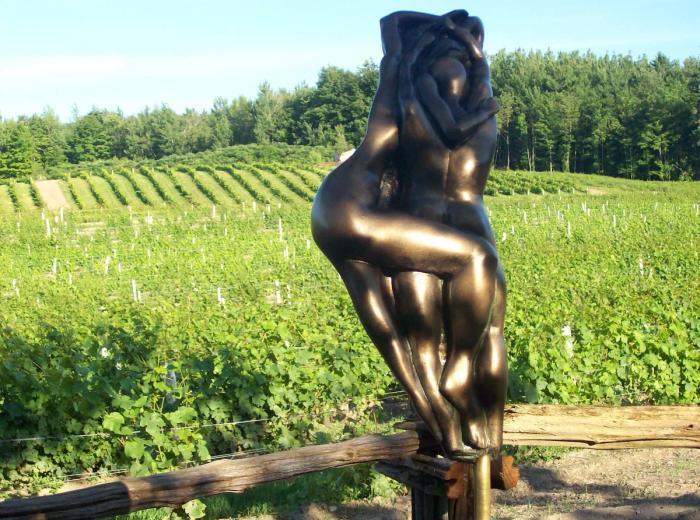
Dunham · Producer
Domaine des Côtes d’Ardoise
A Quebec wine pioneer where organic vines meet outdoor art.
View producer→Lunch
Le Tire-Bouchon · Vignoble de l’Orpailleur
Next, head to Le Tire-Bouchon at Vignoble de l’Orpailleur. Lunch isn't a hole to fill between two tastings: on a day like this, it's part of the route. Le Tire-Bouchon is located directly at Vignoble de l’Orpailleur and offers terroir-driven cuisine designed to pair with the estate's wines. When the weather allows, the terrace looks directly over the vineyard.
It's also the right time to slow down. A morning of tastings followed immediately by another tasting doesn't necessarily teach much. A real meal, some water and an hour at the table will send you off with your ideas — and your palate — much clearer. As always with a seasonal spot, check hours and reserve before you go.
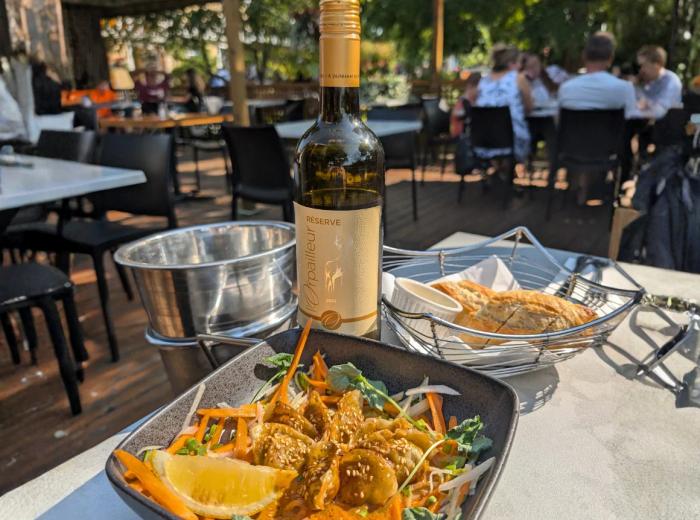
Dunham · Restaurant
Le Tire-Bouchon — Vignoble de l’Orpailleur
1086, rue Bruce, Dunham, Québec, J0E 1M0
View place→Winery no 2
Vignoble de l’Orpailleur
Since we're already on site, the afternoon begins at Vignoble de l’Orpailleur. The estate is one of those that helped establish wine sustainably in the Quebec landscape. For this day, what matters most is the chance to go a little further than tasting. The estate notably offers an ÉCONOMUSÉE route devoted to the winemaker's craft as well as tours that cover its history and northern viticulture.
This is where you can start to put images to expressions we often see when talking about Quebec wine. Growing vines in Quebec imposes very different constraints than Bordeaux or Tuscany. The grape varieties, protection against the cold and decisions made in the vineyard are integral to the style of the wines that then end up in the glass.
After Domaine des Côtes d’Ardoise, you begin to see a continuity. Quebec has produced wine for several decades and producers have had to develop a real way of growing adapted to their territory.
Key takeaway
northern viticulture · history · tasting · know-how
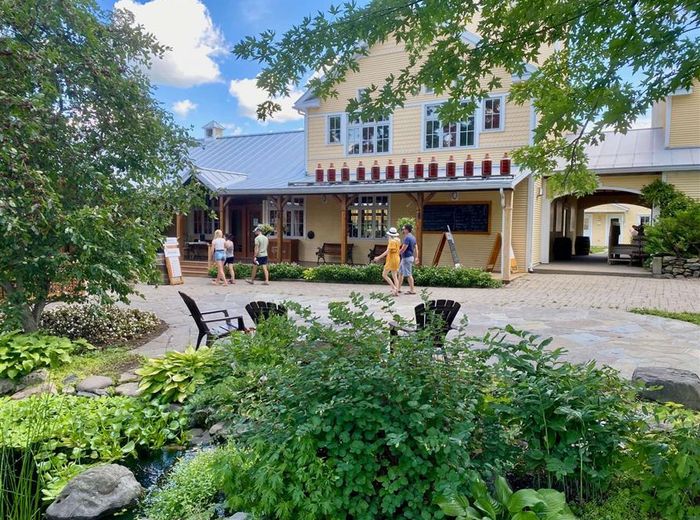
Dunham · Producer
Vignoble de l'Orpailleur
A pioneer of Quebec wine who has cultivated vines in Dunham since 1982 and helped build modern viticulture here.
View producer→Winery no 3
Val Caudalies
For the last stop, we shift the register slightly with Val Caudalies. The estate produces wine, but also cider and vermouths. The founders cultivate a large property with terraces, trails and spaces that let you enjoy the surrounding landscape.
After two estates closely linked to Quebec viticulture history, it's a nice way to end the day: you see how the local terroir can also become a testing ground. You can taste a white or a red, of course, but also step off the planned route with a cider, an orange wine or a vermouth.
And above all, it's no longer really the time to try to learn something at all costs. Pick a few products, enjoy the terrace and let the day end quietly.
Key takeaway
panorama · wines · ciders · vermouth
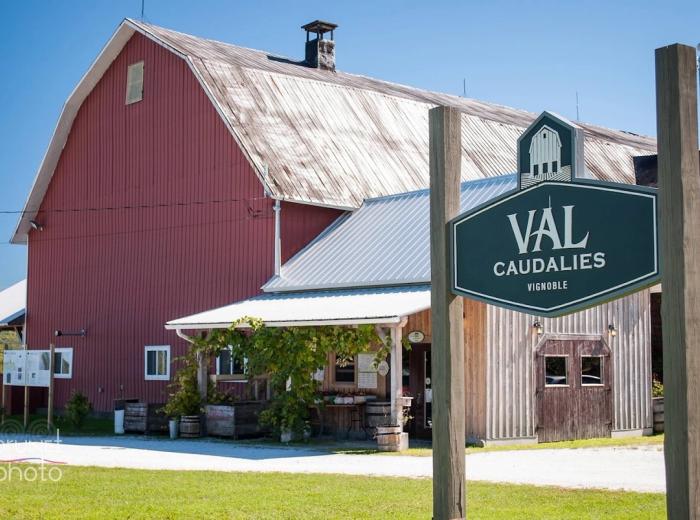
Dunham · Producer
Val Caudalies
An estate in Dunham where wines, ciders and vermouths tell the story of a particularly curious northern viticulture.
View producer→Where to stay
Gîte La Maison Bleue
For the night, we stay in Dunham at Gîte La Maison Bleue. This choice is almost as important as the wineries'. A day on the Wine Route is much more pleasant when it doesn't end with the prospect of a long drive. Staying in the area lets you enjoy the last stop without rushing and turns an outing into a true little getaway.
La Maison Bleue is located right in Dunham. That's exactly what we're looking for here: an address consistent with the route rather than a detour added simply because you needed somewhere to sleep. And the next morning, nothing prevents you from having a coffee in the village before leaving — or deciding that three wineries were really only the beginning.
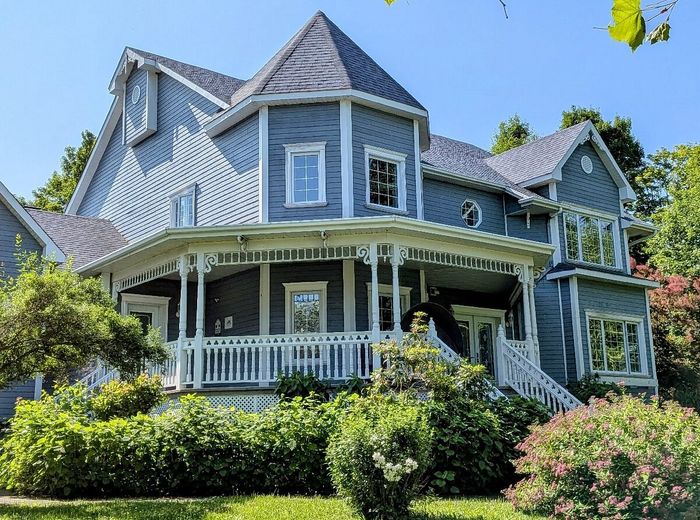
Dunham · Accommodation
Gîte La Maison Bleue
110, chemin du Collège, Dunham, Québec, J0E 1M0
The day at a glance
11 a.m. — Domaine des Côtes d’Ardoise
First tasting, Quebec wine history and a walk among the sculptures.
12:30 p.m. — Le Tire-Bouchon
Lunch at Vignoble de l’Orpailleur.
2 p.m. — Vignoble de l’Orpailleur
Tour and tasting to better understand northern viticulture.
4 p.m. — Val Caudalies
Final tasting, terrace and panorama.
End of day — Gîte La Maison Bleue
Drop the keys and stay in Dunham.
Times are indicative. Activities, opening hours and services vary by season; you should therefore confirm availability and book when necessary before leaving.
Obviously, three wineries doesn't mean three full tastings for the person driving. Whether you have a designated driver, share tastings or spit the wines, plan the day accordingly.
Three is enough
There would still be a huge number of wineries within a few kilometres. That's precisely the reason not to try to see them all. A good day on the Wine Route isn't one where you manage to add the most addresses possible to a list. It's one where you remember the wine you tasted, the person you spoke with and the place where you wanted to stay for twenty more minutes.
This time, we chose Dunham. The next day could very well start somewhere else.
The newsletter
Shall we talk wine again?
Bottles we loved, producers worth knowing and a few places worth discovering. Not every day. Just when we have something good to share.
In this story